Blog
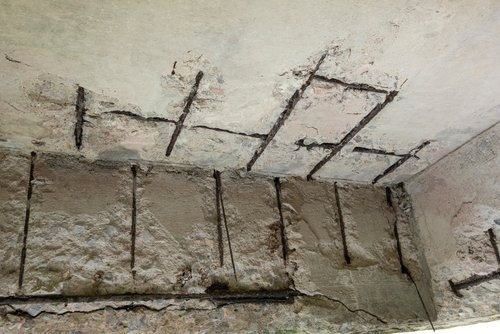
Concrete spalling is a form of deterioration in which the outer surface begins flaking, peeling, or breaking away in small patches. If left unaddressed, this damage can spread and become severe, affecting driveways, walkways, beams, slabs, or even structural elements. The issue typically starts superficially but gradually penetrates deeper, eventually resulting in cracking, exposing coarse aggregates, and revealing corroded internal steel reinforcement (rebar). In Malaysia’s tropical environment where heavy rainfall, humidity, and frequent water leakage issues are common, spalling is often linked to waterproofing failures, roof leaking, wall cracks, and moisture intrusion from toilets, balconies, or external walls. These conditions accelerate concrete deterioration and highlight the importance of timely intervention by waterproofing specialists, PU injection contractors, and building repair professionals. The figure below illustrates examples of concrete spalling in a building.
MOISTURE INGRESS & HUMIDITY DAMAGE
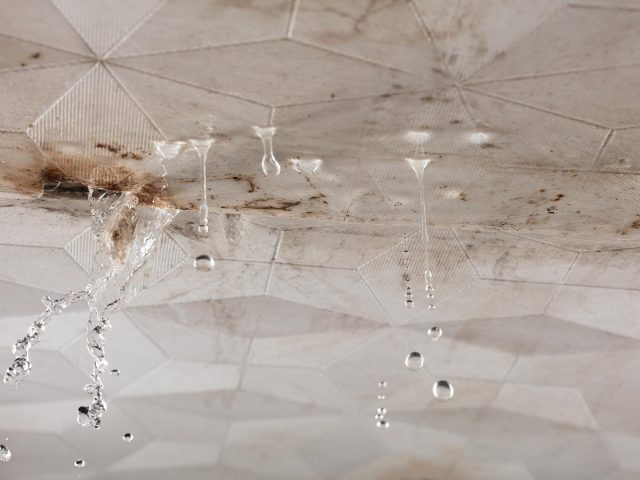
In tropical climates like Malaysia, where freezing does not occur, concrete deterioration is primarily driven by excessive moisture ingress, high humidity, and water leakage from roofs, toilets, balconies, or external walls. Concrete is naturally porous, and when water infiltrates these pores, it weakens the surface over time, especially when waterproofing systems fail or are poorly installed.
Persistent dampness leads to surface scaling, efflorescence, and the formation of micro-cracks that gradually deepen. Areas with chronic leakage such as bathroom slabs, wet kitchens, balconies, or roof slabs face the highest risk, particularly when waterproofing membranes are outdated or damaged. Poor drainage, ponding water, and inadequate slope also increase the rate of deterioration. Left untreated, this moisture-related damage compromises the concrete’s structural integrity and often progresses into reinforcement corrosion, requiring PU injection, waterproofing repair, or grouting works performed by qualified waterproofing contractors to restore safety and stability.
CORROSION OF REINFORCING STEEL
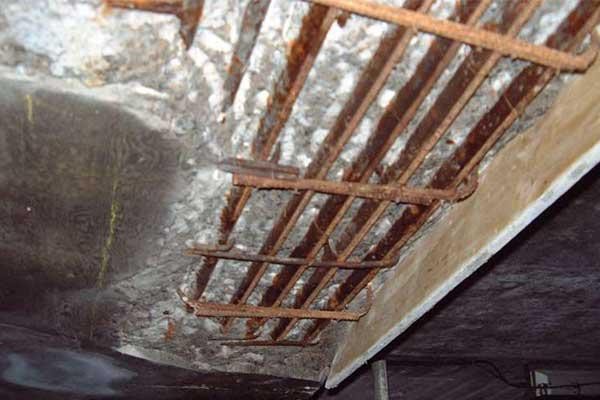
Reinforcement steel corrosion is one of the most critical threats to concrete durability, initiating a self-sustaining cycle that seriously weakens the structure. When water and oxygen penetrate concrete through cracks or porous surfaces, an electrochemical reaction begins, turning steel into rust (iron oxide), which expands up to six times its original volume. This expansion generates internal pressure that causes cracking, delamination, and eventually spalling.
This process accelerates significantly in aggressive environments such as coastal areas (due to chloride attack), buildings with recurring toilet leakage, roof leaking, balcony leakage, or locations with prolonged exposure to humidity. Once the concrete cover cracks and exposes the rebar, corrosion intensifies rapidly, reducing load-carrying capacity and creating safety hazards.
Preventive measures include using high-strength concrete, maintaining low water-cement ratios, ensuring adequate cover thickness (minimum 40mm for moderate exposure), and implementing corrosion inhibitors or protective coatings. In severe cases, methods such as PU injection, crack grouting, or concrete repair systems may be necessary. The figure below shows an example of corroded reinforcement steel.
LOW QUALITY CONCRETE
Low-quality concrete significantly increases susceptibility to spalling and premature structural weakening due to improper mix proportions and inferior material selection. Defective mixes often contain excessive water, insufficient cement, or poor-grade aggregates, resulting in high porosity that allows water and chlorides to penetrate easily. This accelerates corrosion of reinforcement steel and leads to early-stage cracking.
Additionally, poor workmanship such as inadequate compaction, improper curing, or insufficient cover thickness further contributes to weak zones within the concrete. These vulnerable areas deteriorate faster under Malaysia’s humid environment and frequent wet conditions. As a result, visible signs like surface delamination, hairline cracks, water seepage, and concrete flaking may appear years earlier than expected.
Although low-quality materials may seem cost-effective initially, they often lead to significant long-term repair costs involving structural patching, waterproofing repairs, crack injection, coring tests, or building repair works by specialised repair contractors. Maintaining strict quality control during concrete mixing, placement, and curing is essential to achieving long-lasting durability.
WATERPROOFING FAILURE & WATER LEAKAGE
Water penetration from leaking roofs, balconies, bathrooms, or even improperly sealed walls is one of the leading causes of concrete spalling in Malaysian buildings. When waterproofing membranes fail or are improperly installed, water can seep into the concrete, reaching the embedded steel reinforcement (rebar) and accelerating corrosion. This process weakens the concrete matrix, leading to surface flaking, cracking, and, eventually, structural deterioration.
Common sources of water intrusion include roof leaking, neglected balcony repairs, toilet leaking, and poor wall sealing. Over time, these seemingly minor leaks can expand, allowing moisture to penetrate deeper into structural components, which not only accelerates spalling but can also cause mold growth, timber decay, and damage to finishes such as tiles or plaster.