Blog
The exterior facade of a building serves two important roles, protecting it from the weather and enhancing its aesthetic appeal [1]. However, over time, façade can deteriorate due to various factors, leading to visible damage like cracks, discoloration, peeling paint, mould growth and structural fatigue [1]. Thus, regular repairs and repainting are necessary to maintain the building’s functionality, aesthetic appeal and overall value. In this article, we will discuss several factors that affect facade degradation, such as the physical environment, building materials, design and maintenance.
EXTERNAL FACTORS THAT AFFECT EXTERIOR BUILDING’S FAÇADE
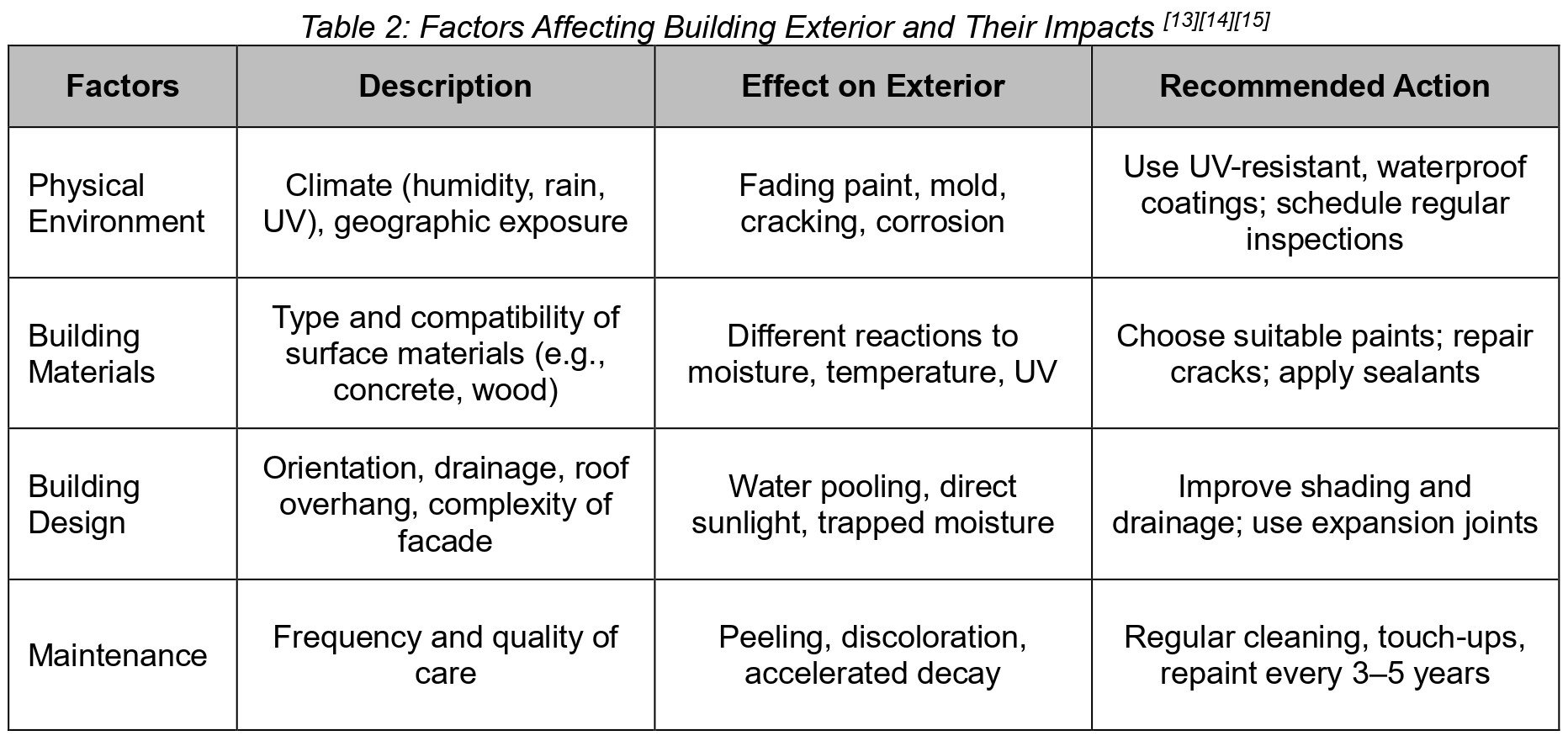
First, physical environment surrounding a building significantly affects the type of facade degradation. Weathering from constant exposure to rain, wind, humidity, temperature fluctuations and UV radiation can lead to material fatigue and surface erosion. In addition, moisture and temperature fluctuations driven by climate change can cause façade building materials to expand and contract, leading to cracking, deformation, degradation, and other forms of damage [2]. For example, buildings located in coastal areas are particularly vulnerable to salt-laden air, which accelerates the corrosion of metal components and weakens painted surfaces. High salt concentrations in the air, combined with moisture and humidity, can cause substantial deterioration of building materials over time [3]. Similarly, buildings in high-humidity or tropical climates such as in Malaysia are more prone to fungal growth and moisture penetration due to prolonged wet seasons [4]. Furthermore, UV radiation from the sun breaks down paint polymers. This can cause colour fading, chalking and loss of adhesion [5]. It is common on facades with dark-coloured paints or finishes with low UV resistance. Not only that, but geographical positioning also matters. This is because facades facing east and west typically receive more direct sunlight, which can lead to heat build-up, increasing both surface and indoor temperatures within a building, possibly necessitating more frequent maintenance compared to the façade that faces the north and south [6].
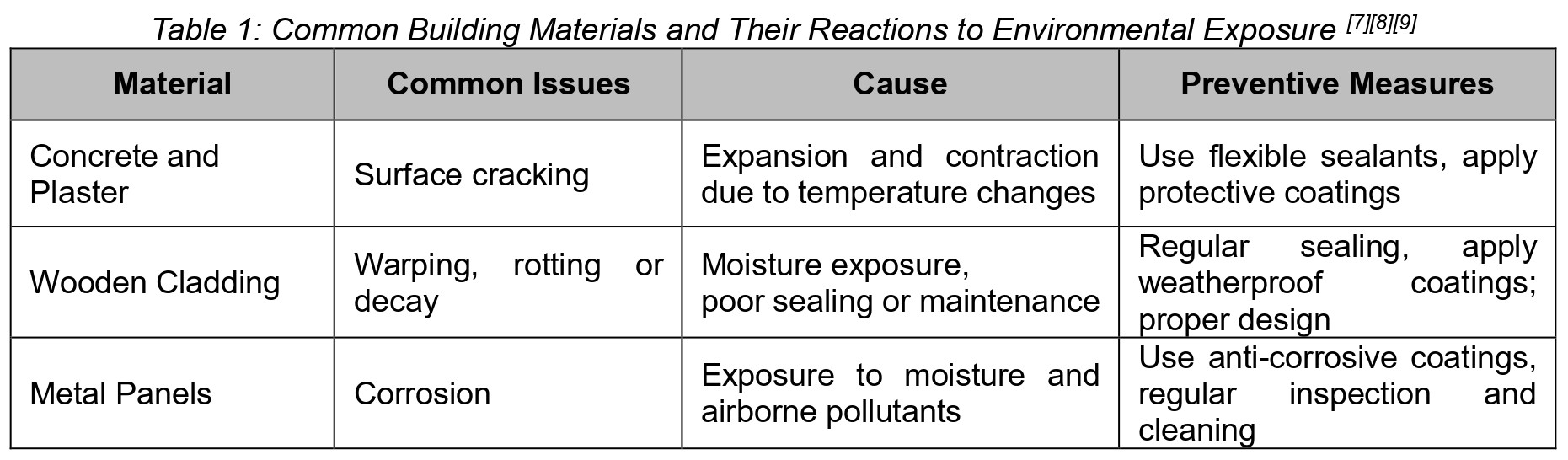
Moreover, the types of materials used for a building’s external walls directly influence how they age and the types of repairs necessary. Deterioration and decay of building materials are exaggerated if they are not properly protected and maintained [7]. Materials such as brick, concrete, metal, wood or plaster all respond differently to environmental conditions. The table below outlines the type of materials, the common issues faced, the cause and how to prevent it from happened.
The compatibility of paint or protective coating with the wall material is crucial. For example, applying oil-based paint on damp concrete can trap moisture, leading to blistering or mould growth. This occurs because the paint is not suitable for that surface condition. To ensure optimal performance and longevity, it is important to select durable coatings specifically designed for each material [10].
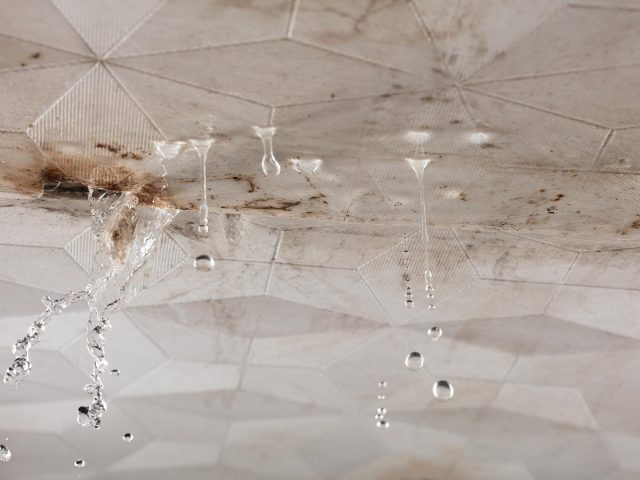
Additionally, architectural design plays a vital role in facade deterioration. Poorly designed buildings with inadequate roof overhangs, drainage systems or ventilation can promote water infiltration and accelerate decay. For instance, vertical facades with little protection from overhangs are directly exposed to rainfall and sun. Furthermore, poor wall drainage and absence of weep holes in cladding systems can trap water inside wall cavities. Complicated facades with joints, seams or multiple textures can lead to uneven weathering and make repairs more difficult and expensive. In addition, the use of unsuitable materials for the environment, improper material connections, or the absence of required expansion joints can place excessive stress on certain façade sections [11]. In contrast, well-designed buildings take into account orientation, material expansion joints, shading devices and the strategic placement of water-resistant coatings to reduce deterioration and simplify maintenance.
Lastly, even if a building constructed with high-quality materials and solid design, poor maintenance can quickly damage the building’s exterior. Without regular cleaning, checks and small repairs, minor issues can turn into significant structural problems. For example, peeling paint can allow moisture to enter, leading to mould growth or concrete damage [12]. Therefore, simple actions such as repainting, fixing cracks early and washing off dirt can help extend the lifespan of the wall. Additionally, using strong coatings like UV-resistant or anti-fungal paints can reduce the need for future repairs. Keeping a regular maintenance schedule helps identify and address problems before they worsen.