Blog
Tiled floors are widely favoured in Malaysian homes due to their durability and aesthetic appeal, yet many homeowners encounter persistent issues like tile popping, cracks, and loosening. These problems not only compromise the floor’s appearance but also pose safety hazards especially when tiles become detached or uplifted. This phenomenon increasingly reported across the country. Understanding the root causes, which range from poor installation to Malaysia’s humid climate is crucial for preventing costly repairs and ensuring long-lasting flooring.
1. INADEQUATE ADHESIVE
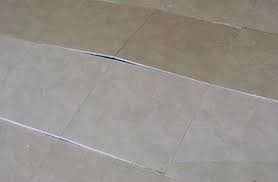
The selection and application of tile adhesive play a crucial role in ensuring long-lasting flooring, with improper use being a primary cause of tile detachment in Malaysian homes. One common mistake is using incompatible adhesives, particularly when installers fail to distinguish between indoor and outdoor formulations or neglecting substrate specific requirements, which creates inherent weaknesses in the installation [1]. In Malaysia’s humid tropical climate, these issues are exacerbated as inadequate adhesive coverage leads to hollow voids beneath tiles, while low quality products deteriorate faster under constant moisture exposure. The problem intensifies when installers apply adhesives too thinly or unevenly, resulting in surfaces that are unable to withstand daily stresses like foot traffic, thermal expansion, or natural subfloor movement. These adhesive failures manifest as popping, cracking or complete tile detachment. In addition, these problems are particularly prevalent in Malaysia, where high humidity accelerates material breakdown. Proper installation demands careful consideration of climate-appropriate products, complete adhesive coverage, and substrate-specific solutions to prevent costly repairs and maintain floor integrity over time. Figure below shows the popping tiles.
2. POOR MATERIAL QUALITY
Substandard materials frequently contribute to premature tile failures across Malaysian homes, with low quality tiles, adhesives and grouts being particularly problematic. Inferior tiles often exhibit structural weaknesses, inconsistent thickness or poor manufacturing standards making them susceptible to cracking under normal foot traffic or thermal stress. Many budget adhesives lack the necessary bonding strength or flexibility to withstand Malaysia’s humid climate resulting in weakened adhesion over time [3]. Cheap grouts typically deteriorate rapidly when exposed to moisture, allowing water penetration that further compromises the installation. These material deficiencies frequently manifest as cracked surfaces, loose tiles and deteriorating grout lines, which often appear much sooner than expected. The country’s tropical environment exacerbates these issues, as constant humidity and temperature fluctuations accelerate the breakdown of substandard materials. Without proper quality control in material selection, homeowners are left to face recurring floor problems that require frequent and costly repairs.
3. LACK OF EXPANSION JOINTS
The omission of expansion joints in tile installations is a major cause of flooring problems in Malaysian residences. Due to the country’s tropical climate, building materials undergo continuous expansion and contraction due to daily temperature fluctuations and high humidity levels. Without proper expansion gaps, tiles become tightly pressed against each other and adjacent structures, leading to internal stresses that eventually lead to visible damage. This pressure manifests as cracked tile surfaces, popped edges, or tenting effects where entire sections lift from the substrate [3]. This issue particularly pronounced in large tiled areas or spaces exposed to direct sunlight, where thermal movement is most extreme. Many local installations either completely neglect expansion joints or implement them improperly, failing to account for the natural movement of building materials. The problem is further aggravated by Malaysia’s humid conditions, where moisture absorption causes additional substrate movement, making the absence of expansion joints a primary contributor to premature tile failures throughout Malaysian homes.
4. CLIMATE AND MOISTURE IMPACT
Malaysia’s tropical climate significantly contributes to tile popping and cracking, as constant humidity causes building materials to absorb moisture and expand, creating internal stress beneath the tiled surface. Daily temperature fluctuations, especially in sun-exposed areas such as balconies or rooms with large windows, lead to repeated thermal expansion and contraction, further weakening the bond between tiles and the substrate. Moisture penetration from rising dampness, minor leaks, or deteriorated grout also accelerates adhesive breakdown, particularly in kitchens and bathrooms where water exposure is frequent. When these environmental factors combine with poor installation or low-quality materials, tiles become far more vulnerable to loosening, cracking, and tenting in Malaysian homes.