Blog
Balconies and awnings are essential external features of a building. They provide shade, improve outdoor comfort, and enhance the overall appearance of a structure. However, due to their constant exposure to weather elements such as rain, wind, heat, and sunlight, these features are often among the first parts of a building to show signs of deterioration. Over time, without timely maintenance, they can suffer from cracks, rust, water leakage, and general wear and tear. When environmental elements mentioned above are added to the equation, these issues can be intensified, leading to more severe damage than would otherwise occur [1]. Problems such as balcony leaking, wall cracks, and failed grouting are common, often requiring early intervention from a waterproofing specialist or repair specialist before the damage spreads.
Therefore, regular inspection and repair of balconies and awnings are necessary to ensure the safety, functionality, and aesthetic appeal of the building [2]. This article highlights the most common structural problems, emphasizes the need for waterproofing, and discusses how various materials can degrade over time.
FACTORS CONTRIBUTING TO BALCONY AND AWNING DAMAGE
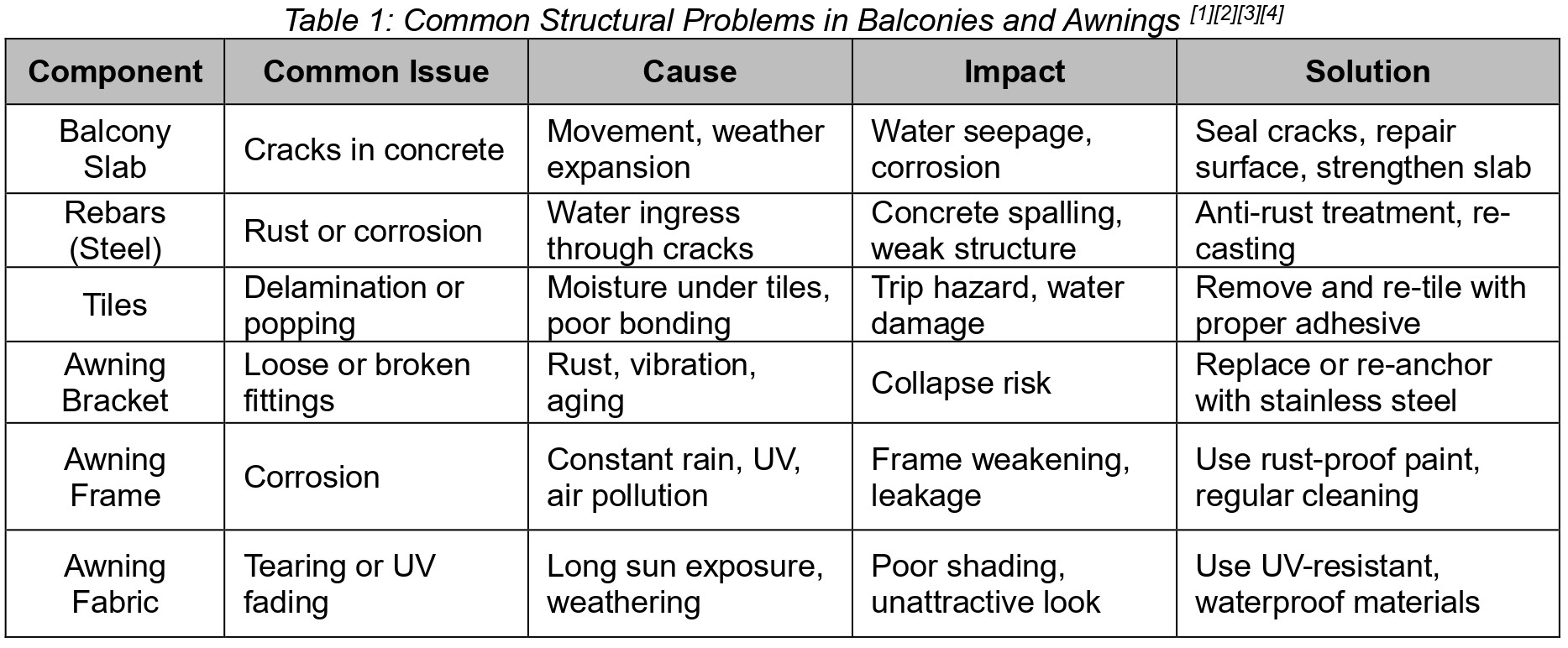
To begin with, balconies are typically designed as cantilevered structures, meaning they extend outward from the main building without direct support beneath. While this design is practical and space-efficient, it is also more susceptible to movement, external stress and exposure to harsh weather conditions. If not constructed or maintained properly, balconies can develop several problems over time. For example, cracks may form in the concrete due to thermal expansion or structural movement. Moisture that enters through these cracks can reach the steel reinforcement bars (rebars), causing them to rust. This corrosion can lead to further deterioration, such as expansion of the steel rebars due to rust, which can lead to concrete cracking and spalling. In addition, tiles on the balcony surface may become loose or break away if water gets trapped underneath. Not only that, railings that are not securely fixed may also weaken over time, posing serious safety risks [1].
Awnings, which are typically built with metal frames, are similarly prone to wear and tear. Metal components such as brackets and supports may corrode over time due to continuous exposure to rain, humidity and pollution. The fabric covering the awning may fade, tear or become brittle under prolonged ultraviolet (UV) exposure [3]. In some cases, poorly designed awnings with poor or insufficient slope can lead to water pooling, which further weakens the structure and causes sagging or leakage at the joints [4].
If these structural issues are left unaddressed, they can compromise the overall function and safety of both balconies and awnings, potentially endangering building users and the public.
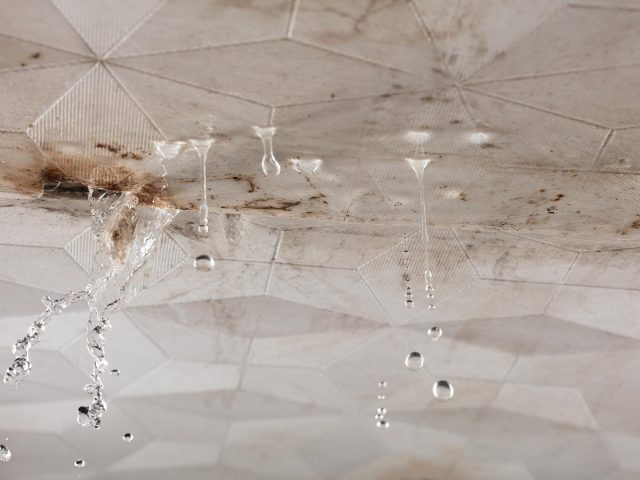
Moving on, one of the most significant issues affecting the condition of balconies and awnings is water penetration. When water seeps through small cracks or open joints, it can lead to serious structural damage over time [5]. As an example, on balconies, this often results in the corrosion of steel reinforcement within the concrete, leading to cracks and eventually concrete spalling. Other signs of a leaking balcony include tiles coming off the floor and walls, standing puddles of water, cracked or missing seals and grout, cracked walls and worse, a collapsing balcony [5]. In the case of awnings, poor state of waterproofing may cause water to pool around the joints, weakening the structural frame and allowing leaks to enter the building interior.
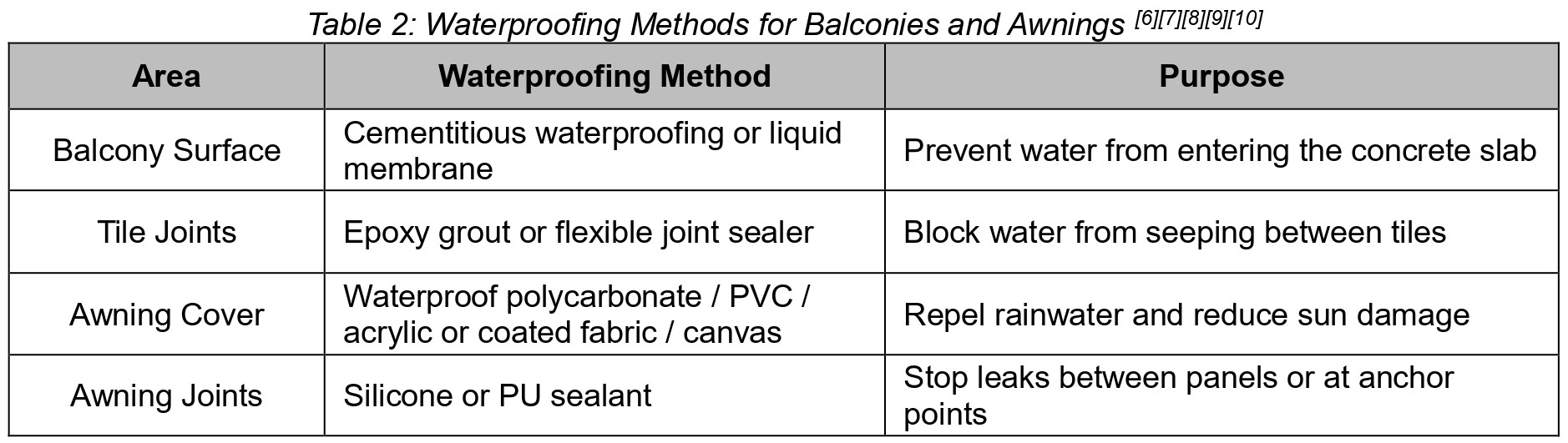
Therefore, it is essential to apply an effective waterproofing system. This not only prevents water from reaching the building’s structural components but also helps to avoid the formation of mould, algae, and unsightly surface stains. Proper waterproofing extends the lifespan of these external features and reduces the need for frequent repairs [6].
Lastly, it is crucial to understand how different materials respond to long-term exposure and how they degrade over time. This is because, even high-quality materials can deteriorate if they are not properly protected or maintained [11]. For instance, concrete is susceptible to cracking and can absorb water, which may lead to internal rusting of the reinforcement bars [12]. Similarly, steel and iron components corrode quickly in humid or coastal environments, especially if they are not adequately painted or coated [13].
Additionally, ceramic tiles may become loose or crack if moisture builds up underneath them, especially with defective/improperly installed tiles, compromising both their appearance and safety [14]. Meanwhile, awning fabrics/plastics are also at risk, as prolonged exposure to ultraviolet (UV) rays can cause the material to fade, tear, and lose its waterproof properties [15]. Moreover, if wood is used in the structure, it can rot, crack, fracture, swell or attract insects when exposed repeatedly to moisture [13].
Therefore, choosing the right materials for outdoor applications and maintaining them with suitable protective coatings is vital for extending their durability and performance over time.